For manufacturers, distributors, and global suppliers, air cargo shipping is often the fastest and most reliable way to move high-value or time-sensitive freight internationally. Unlike parcel carriers, professional freight forwarders handle palletized cargo, commercial freight, and large-volume shipments that require coordination across multiple parties.
If your business is shipping palletized goods internationally, understanding the door-to-door air freight process helps you reduce delays, avoid compliance issues, and control costs.
This guide breaks down the complete air cargo shipping process from door to door, specifically for clients moving larger freight shipments.
What Is Door-to-Door Air Cargo Shipping?
Door-to-door air freight service means your cargo is picked up from your facility (manufacturer, warehouse, or distribution center) and delivered directly to your customer’s location overseas.
A professional air freight forwarder manages:
- Cargo pickup
- Export documentation
- Customs clearance (origin and destination)
- Airline booking
- Cargo handling
- Import clearance
- Final delivery
For B2B shippers moving palletized goods, this end-to-end coordination is critical for keeping supply chains running smoothly.
Step-by-Step: The Air Cargo Shipping Process
- Shipment Planning & Quotation
The process begins with shipment details.
To receive an accurate air freight quote, your forwarder will require:
- Origin and destination
- Number of pallets
- Dimensions (L x W x H)
- Total gross weight
- Cargo description
- Commercial value
- Incoterms (EXW, FOB, DDP, etc.)
- Ready date
For palletized cargo, freight charges are based on chargeable weight, which compares:
- Actual weight
- Volumetric weight (dimensional weight)
Understanding how air freight rates are calculated is essential for budgeting and cost forecasting.
- Cargo Pickup from Your Facility
Once confirmed, the shipment is scheduled for pickup.
For B2B air cargo shipments, this typically involves:
- Dock pickup at a warehouse
- Liftgate service (if required)
- Scheduled truck appointment
- Coordination with shipping department
Unlike parcel shipping, palletized cargo must be:
- Properly shrink-wrapped
- Secured on standard pallets
- Labeled with handling marks
- Marked with export documentation
Professional freight forwarders ensure cargo meets IATA air cargo standards before it moves to the airport.
- Export Documentation & Compliance
One of the most critical parts of international air freight shipping is documentation.
Common documents include:
- Commercial Invoice
- Packing List
- Air Waybill (AWB)
- Export Declaration (AES filing for U.S. exports)
- Certificates (if required)
- Dangerous Goods Declaration (if applicable)
Compliance errors can cause costly delays. commercial shipments, especially industrial equipment, electronics, machinery parts, and regulated goods must meet export regulations before departure.
Your freight forwarder verifies:
- HS codes
- Export licensing requirements
- Country-specific documentation
- Restricted party screening
Strong documentation management improves transit time reliability and reduces customs holds.
- Cargo Delivery to Airport & Airline Handling
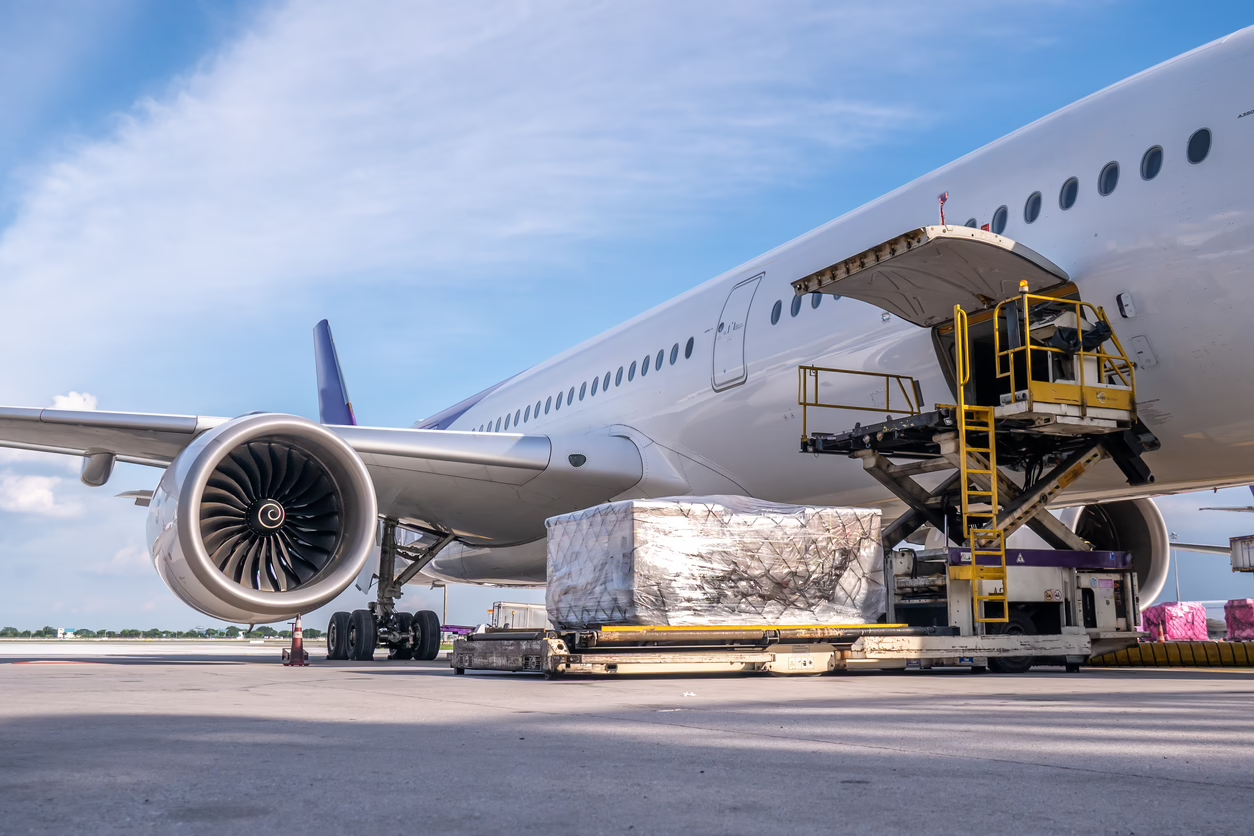
After pickup and documentation clearance, your palletized cargo is delivered to the airport cargo terminal.
At this stage:
- Cargo is screened for security
- Weight and dimensions are verified
- Freight is prepared for aircraft loading
- Airline booking is confirmed
There are typically two types of air freight options:
Direct Air Freight
- Faster transit
- Higher cost
- Fewer handling points
Consolidated Air Freight
- Cost-effective
- Slightly longer transit
- Multiple shipments combined
For clients, the choice depends on:
- Urgency
- Budget
- Production timelines
- Inventory levels
Air freight transit times generally range from 1–5 days airport-to-airport, depending on route and capacity.
- International Air Transport
Once loaded, cargo travels via:
- Passenger aircraft
- Dedicated freighter aircraft
Global air cargo routes connect major trade lanes such as:
- USA to Europe
- USA to Asia
- Asia to North America
- USA to South Pacific
Air freight is ideal for:
- High-value goods
- Just-in-time manufacturing
- Urgent production components
- Replacement parts
- Electronics
- Automotive parts
- Medical equipment
Because of speed, air transport minimizes inventory holding costs and production downtime.
- Arrival at Destination Airport
When the shipment lands:
- Cargo is unloaded
- Handed to the airline’s ground handling agent
- Submitted for import customs clearance
At this stage, efficient coordination becomes critical. Delays often occur here if:
- Documentation is incomplete
- Duties/taxes are unpaid
- Import licenses are missing
An experienced forwarder coordinates with customs brokers to prevent clearance delays.
- Import Customs Clearance
Customs clearance includes:
- Submission of entry documentation
- Payment of duties and taxes
- Inspection (if required)
- Release authorization
For importers, this is where preparation matters most. Having:
- Correct HS codes
- Accurate product descriptions
- Clear commercial invoices
- Proper Incoterms
Ensures smooth release. Customs delays are one of the most common causes of air freight disruptions. Working with a knowledgeable freight forwarder reduces risk.
- Final Mile Delivery to Customer
Once customs releases the freight, it moves to final delivery.
For commercial shipments, this may involve:
- Scheduled dock delivery
- Appointment-based delivery
- Liftgate or forklift unloading
- Inside delivery (if arranged)
This completes the door-to-door air freight process.
At this stage, your customer receives the shipment directly at their warehouse or distribution center.
Why Companies Choose Air Freight
For larger commercial shipments, air cargo provides:
- Faster Supply Chain Cycles
Reduce production downtime and meet strict deadlines.
- Lower Inventory Carrying Costs
Faster shipping means less capital tied up in inventory.
- Improved Reliability
Compared to ocean freight, air freight has fewer delays from port congestion.
- Secure Handling for High-Value Goods
Air cargo terminals maintain strict security protocols.
Common Challenges in Air Cargo Shipping (And How to Avoid Them)
Incorrect Weight & Dimensions
Inaccurate measurements lead to reweigh charges and delays.
Poor Palletization
Improper packaging can cause damage during handling.
Documentation Errors
Even small invoice mistakes can trigger customs holds.
Capacity Shortages
During peak season, air freight space fills quickly.
Planning ahead and working with an experienced freight forwarder ensures smoother execution.
How to Prepare Your Palletized Cargo for Air Freight
For smooth door-to-door air cargo shipping:
- Use standard 40×48 pallets (unless otherwise required)
- Shrink wrap tightly
- Protect corners and edges
- Clearly label all cartons
- Provide accurate weight and dimensions
- Ensure commercial invoices match cargo exactly
Proper preparation reduces transit risk and improves customs clearance speed.
Choosing the Right Air Freight Forwarder
When selecting a partner for international air cargo shipping, look for:
- Experience handling palletized freight
- Strong airline relationships
- In-house customs expertise
- Transparent air freight pricing
- Real-time shipment tracking
- Dedicated account management
If your business regularly ships larger freight, you need a forwarder experienced in managing commercial freight, not small package logistics.
Frequently Asked Questions About Door-to-Door Air Freight
How long does door-to-door air freight take?
Typically 3–7 days internationally, depending on origin, destination, and customs clearance.
How is air freight cost calculated?
Based on chargeable weight (higher of actual or volumetric weight), route, fuel surcharges, and handling fees.
Is air freight safe for industrial equipment?
Yes, when properly packaged and palletized, air cargo is one of the most secure international shipping methods.
What is the difference between airport-to-airport and door-to-door air freight?
Airport-to-airport covers only air transport. Door-to-door includes pickup, customs clearance, and final delivery.
Final Thoughts: Optimizing Your Air Cargo Shipping Process
The door-to-door air cargo shipping process involves far more than just booking a flight. It requires:
- Precise documentation
- Proper cargo preparation
- Customs expertise
- Airline coordination
- Final delivery management
For businesses shipping freight internationally, partnering with an experienced air freight forwarder ensures faster transit, reduced risk, and full supply chain visibility.
If your company regularly moves commercial cargo and needs reliable international air freight services, working with a forwarder that specializes in palletized shipments can significantly improve efficiency and cost control.
Ready to ship your cargo air? Contact Allison Shipping today to get a competitive quote and personalized logistics plan for your international freight needs.