When shipping goods internationally, understanding how to calculate CBM (Cubic Meter) is essential for obtaining accurate freight quotes, planning shipments, and controlling transportation costs. Whether you’re shipping a few pallets through an LCL (Less than Container Load) service or moving oversized breakbulk cargo, CBM plays a critical role in how ocean freight rates are determined.
What Is CBM in Ocean Freight?
CBM stands for Cubic Meter, the standard unit used to measure the volume of cargo in international shipping. Freight forwarders, ocean carriers, and logistics providers use CBM to determine how much space your shipment occupies inside a container or vessel.
For LCL shipments, where multiple shippers share container space, freight costs are typically calculated based on the shipment’s CBM. The more space your cargo occupies, the higher the shipping cost.
Understanding your CBM before requesting an ocean freight quote can help you budget accurately and avoid unexpected charges.
Why CBM Matters in Ocean Freight Forwarding
CBM affects several aspects of the shipping process, including:
- Ocean freight pricing
- Container utilization
- Cargo planning and consolidation
- Warehouse storage requirements
- Customs documentation
- Freight forwarding quotes
For companies regularly importing or exporting cargo, accurately calculating the volume helps improve supply chain efficiency and reduces the risk of shipping delays.
How to Calculate CBM
The CBM formula is straightforward:
CBM = Length × Width × Height
All dimensions should be measured in meters.
Example 1: Single Carton
Let’s say your shipment consists of one carton measuring:
- Length: 1.2 meters
- Width: 0.8 meters
- Height: 0.5 meters
Calculation:
1.2 × 0.8 × 0.5 = 0.48 CBM
The total cargo volume is 0.48 cubic meters.
Example 2: Multiple Cartons
If you have 20 identical cartons measuring:
- Length: 0.6 meters
- Width: 0.4 meters
- Height: 0.5 meters
First calculate one carton:
0.6 × 0.4 × 0.5 = 0.12 CBM
Then multiply by the quantity:
0.12 × 20 = 2.4 CBM
Your total shipment volume is 2.4 CBM.
Converting Centimeters to Meters
Many manufacturers provide package dimensions in centimeters rather than meters.
To convert centimeters to meters:
Meters = Centimeters ÷ 100
For example:
- Length: 120 cm = 1.2 m
- Width: 80 cm = 0.8 m
- Height: 50 cm = 0.5 m
After conversion, use the standard CBM formula.
Alternatively, you can calculate directly in centimeters:
CBM = (Length × Width × Height × Quantity) ÷ 1,000,000
This converts cubic centimeters into cubic meters automatically.
How CBM Affects LCL Shipping Costs
For LCL ocean freight, carriers charge based on the volume your cargo occupies within a shared container.
Unlike FCL (Full Container Load) shipping, where you pay for the entire container, LCL allows businesses to ship smaller quantities by paying only for the space they use.
For example:
- Shipment A = 2 CBM
- Shipment B = 10 CBM
Shipment B will generally incur higher ocean freight charges because it occupies more container space.
This is why freight forwarders always request cargo dimensions when preparing LCL freight quotes.
Volume vs. Weight: Which One Determines Freight Charges?
In ocean freight, charges may be based on either:
- Cargo volume (CBM)
- Cargo weight (metric tons)
For many LCL and breakbulk shipments, carriers use the principle of W/M (Weight or Measure), meaning the greater value between weight and volume determines the chargeable freight.
As an example:
- Shipment Volume: 5 CBM
- Shipment Weight: 3 Metric Tons
The carrier may charge based on 5 revenue tons because the volume exceeds the weight factor.
Your freight forwarding partner can help determine the applicable calculation for your shipment.
CBM for Oversized and Breakbulk Cargo
Not all cargo fits inside standard shipping containers.
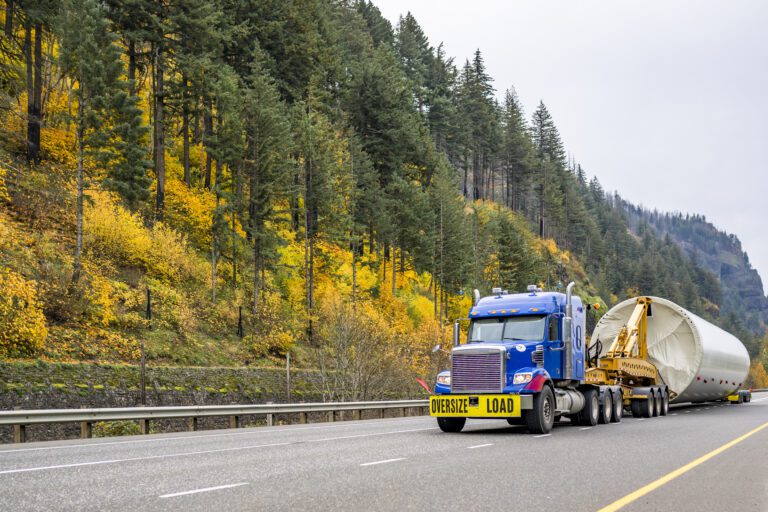
Large industrial equipment, construction machinery, wind turbine components, and project cargo often move as breakbulk shipments. These shipments are loaded individually onto vessels rather than being containerized.
For breakbulk cargo, accurate CBM calculations become even more important because vessel operators use cargo dimensions to:
- Plan stowage
- Allocate deck space
- Calculate freight rates
- Ensure safe cargo handling
Incorrect measurements can lead to costly adjustments, delays, or additional handling fees.
Common CBM Calculation Mistakes
Many shippers unintentionally underestimate their cargo volume. Common mistakes include:
Ignoring Packaging
Always measure the final packed dimensions, including:
- Pallets
- Crates
- Protective packaging
- Dunnage materials
Using Incorrect Units
Mixing inches, feet, centimeters, and meters often result in inaccurate calculations.
Forgetting Quantity
Calculate the CBM of one package first, then multiply by the total number of units being shipped.
Rounding Too Aggressively
Small measurement differences can significantly impact total CBM on larger shipments.
When Should You Choose LCL Instead of FCL?
LCL shipping is often the most economical option when:
- Your shipment is less than 15 CBM
- You don’t need an entire container
- You’re looking to reduce inventory costs
- You ship smaller quantities regularly
However, once cargo volume increases, FCL shipping may offer lower per-unit transportation costs.
An experienced international freight forwarder can compare both options and recommend the most cost-effective solution.
Partner with an Experienced Ocean Freight Forwarder
Whether you’re shipping a few cartons through LCL, moving a full container, or coordinating a complex breakbulk project cargo shipment, accurate CBM calculations are the foundation of efficient logistics planning.
Knowing your cargo volume helps ensure accurate ocean freight quotes, smoother customs processing, and better supply chain visibility.
If you’re preparing an international shipment and need assistance calculating volume, selecting the right shipping mode, or obtaining competitive ocean freight rates, our team at Allison Shipping is here to help. We can evaluate your cargo requirements and recommend the most efficient transportation solution for your business. Contact us today to get a customized quote on your next ocean freight shipment.