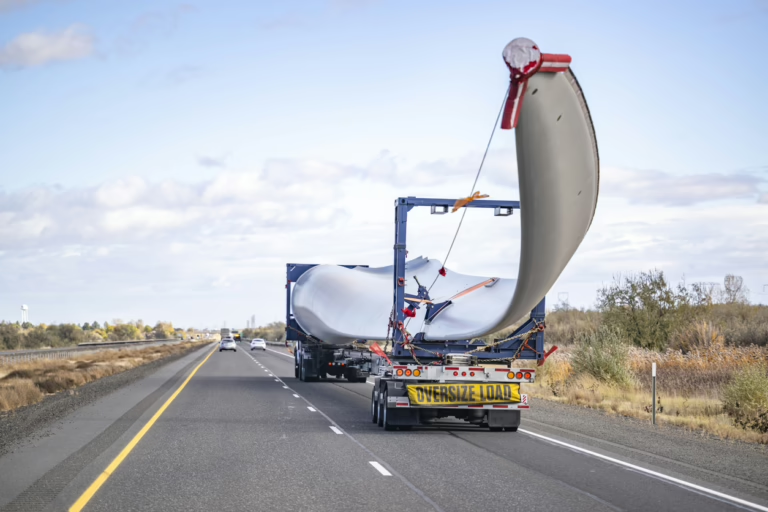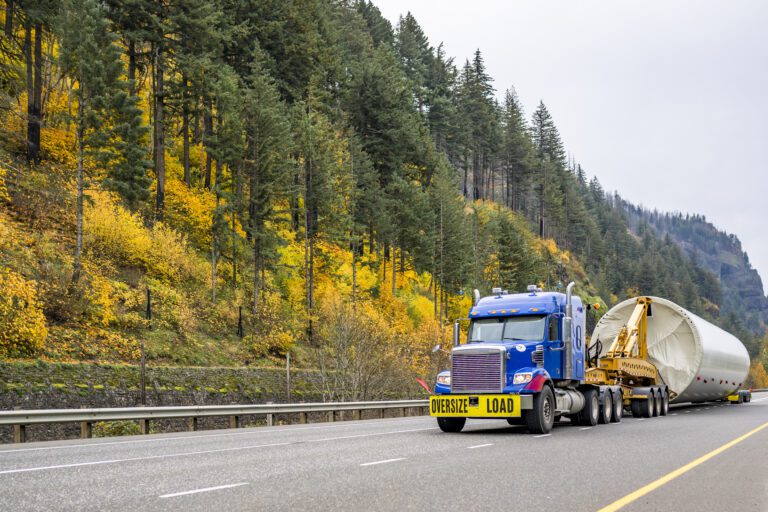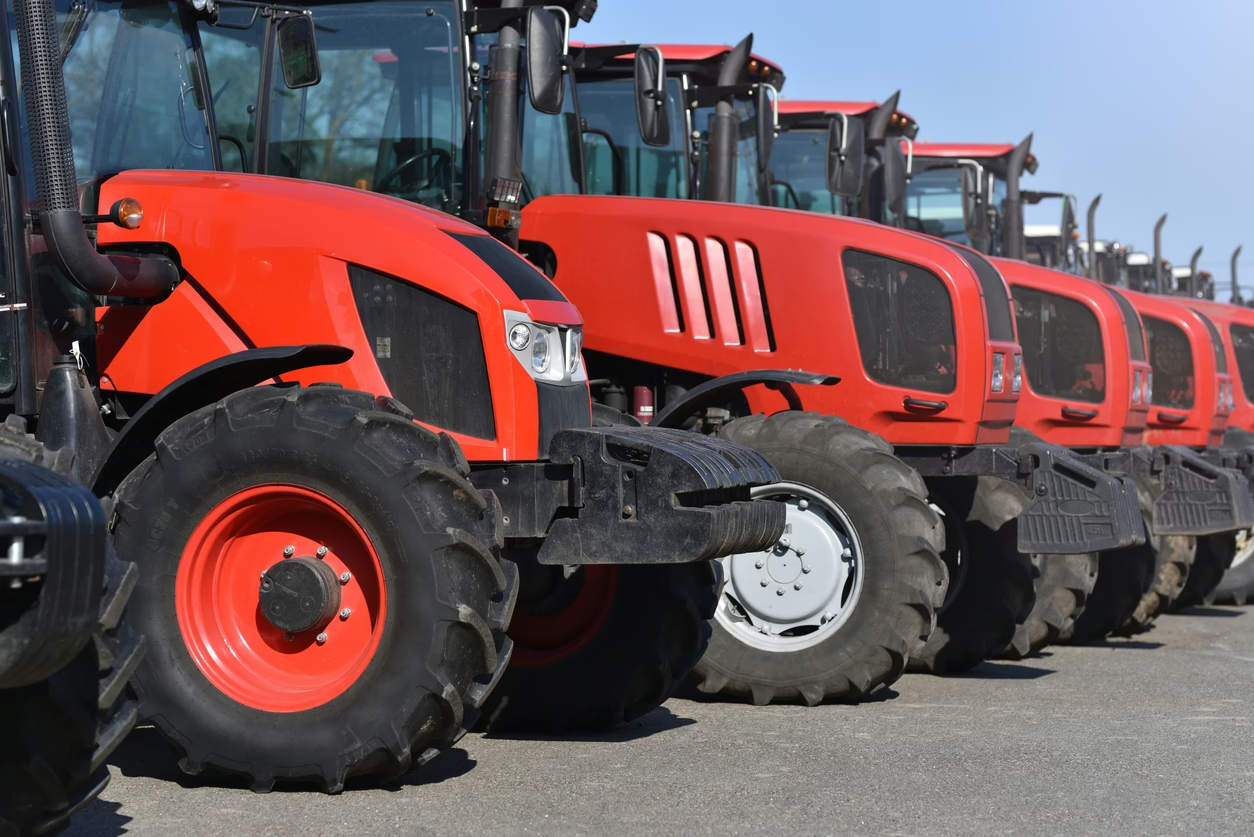
Moving agricultural equipment across borders isn’t like shipping pallets of parts. Combines, tractors, sprayers, balers, harvesters, and specialty implements often exceed standard container dimensions, carry high replacement value, and require careful handling from origin pickup to overseas discharge. For agriculture machine dealers and professional shippers, the difference between a smooth export and a costly delay usually comes down to choosing the right shipping mode of transport and meeting the paperwork, compliance, and packing requirements from the United States.
Start with the Right Shipping Mode
Below is a guide to the most common international shipping options for agricultural machinery, with an emphasis on breakbulk shipping, RORO shipping (roll-on/roll-off), and out of gauge (OOG) container shipping using flat racks and open top containers.
1) RORO Shipping for Wheeled and Drivable Machinery
If your equipment can roll—think tractors, loaders, telehandlers, self-propelled sprayers—RORO shipping is often the most efficient and cost-effective solution. RORO vessels are purpose-built to load vehicles via ramps and secure them inside the ship. This method is popular for used equipment exports and dealer-to-dealer transactions where speed and simplicity matter.
Best Fit for RORO:
- Wheeled or tracked machinery that can safely move under its own power (or be towed)
- Units that don’t require containerization
- Dealers exporting multiple units to the same destination
Considerations:
- Machinery must be clean (many countries enforce strict biosecurity and soil contamination rules)
- You’ll still need export documentation and customs compliance
- Accessories may need separate packaging or shipment depending on port and carrier rules
2) Breakbulk Shipping for Non-Containerized, Oversized Cargo
When your equipment is too wide, too tall, too heavy, or includes non-drivable components, breakbulk shipping becomes a strong option. Breakbulk cargo is lifted by crane and stowed individually, which is ideal for headers, booms, large attachments, or machines that exceed safe RORO parameters.
Best Fit for Breakbulk:
- Large combines or harvesters with removed headers
- Implements with difficult geometry
- Machinery that can’t be containerized due to dimensions or weight distribution
Considerations:
- Requires professional lashing, blocking, and bracing
- Packaging and corrosion protection are critical because cargo may be exposed at terminals
- Port capabilities matter, crane capacity and handling expertise vary
3) Out of Gauge Shipping via Flat Rack Containers
For many oversized machines, flat rack container shipping is the sweet spot between conventional containers and breakbulk. A flat rack has end walls but no side walls, allowing cargo to exceed standard container width. It can be shipped on container vessels with specialized stowage.
Best Fit for Flat Rack (OOG) Shipping:
- Machinery that is wider than a standard container
- Units that need container-vessel routing but can’t fit inside a box
- Equipment requiring strong secure points and stable base support
Considerations:
- OOG shipments often require carrier approvals and engineering review
- Ports may impose limits on out-of-gauge profiles, especially for rail moves to the port
- Proper measurement is everything: overall length, width, height, and weight (including attachments)
4) Open Top Containers for Tall Machinery
If the main obstacle is height, an open top container may work. It ships like a standard container but allows top loading and tall cargo that exceeds internal height (within carrier limits). The top is covered with a tarpaulin and requires robust securing.
Best Fit for Open Top Container Shipping:
- Tall equipment or assemblies that can’t be lowered easily
- Machinery that fits within width but exceeds container height
Considerations:
- Weather protection and moisture control must be planned
- Securement is specialized; movement and vibration risk is higher than standard boxed cargo
Key Requirements to Export Agricultural Machinery from the United States
International machinery shipping is as much compliance as it is transport. Here are the major requirements that protect your schedule and your margins.
Accurate Dimensions and Weight (with attachments)
Oversized pricing, routing, and vessel acceptance depend on precise specs. Provide:
- Overall L x W x H
- Operating weight (not brochure weight—include fluids if shipped “wet”)
- Photos from all sides
- Special handling needs (fork pockets, lifting points, tie-down locations)
This step directly impacts feasibility for RORO, breakbulk, flat rack, or open top planning, and helps avoid rework at the port.
Export Documentation and Filing (EEI/AES)
Many U.S. exports require Electronic Export Information (EEI) filing through AES, depending on value and destination. Dealers shipping internationally should also expect:
- Commercial Invoice or Bill of Sale
- Packing List
- Shipper’s Letter of Instruction (SLI)
- Export classification details (HS codes) for customs and duties
Cleaning and Biosecurity Standards (Soil-Free Equipment)
Many countries enforce strict agriculture quarantine rules. Many shipping lines do not accept units that they deem “dirty” to ship. Dirt, plant material, and residue can cause:
- Port inspections
- Mandatory steam cleaning
- Delays and storage charges
Pro tip for dealer exports: plan cleaning before final photos and loading so you can document compliance and reduce destination surprises.
Hazardous materials and battery/fuel rules
Machinery can fall under hazmat rules due to:
- Fuel in tanks
- Oils, lubricants, and aerosols
- Batteries (especially lithium)
Many carriers require draining the fuel, disconnecting any batteries, or special declarations for the unit to be accepted for shipping.
Cargo Securing, Marine Insurance, and Risk Management
Oversized freight must be secured to withstand ocean conditions and terminal handling. Expect:
- Engineered lashing plans for flat racks or breakbulk
- Chocking and bracing requirements
- A strong recommendation for marine cargo insurance (especially for used equipment where replacement logistics are slow)
What Dealers and Shippers Should Look for in an Oversized Logistics Partner
For commercial transactions, clients care about predictability as much as price. The right international logistics provider should offer:
- Mode selection expertise: RORO vs breakbulk vs OOG container shipping
- Port-to-port and door-to-door options (including inland heavy haul)
- Support with EEI/AES filings and export documentation
- Packaging oversight (ISPM-15 wood, corrosion control, shrink wrap)
- Visibility: milestones and proactive exception management
Moving Your Machinery Forward
International shipping for agricultural equipment is most successful when dealers treat it like a repeatable process: confirm specs, select the correct shipping method (often RORO, breakbulk, or OOG container), and align documentation, cleaning, and securing requirements early. Done right, you cut down on delays, prevent compliance issues, and create a smoother shipment experience, exactly what drives repeat transactions and long-term dealer relationships.
Ready to ship your machinery internationally? Contact Allison Shipping today to get a competitive quote and personalized logistics plan for your international freight needs.