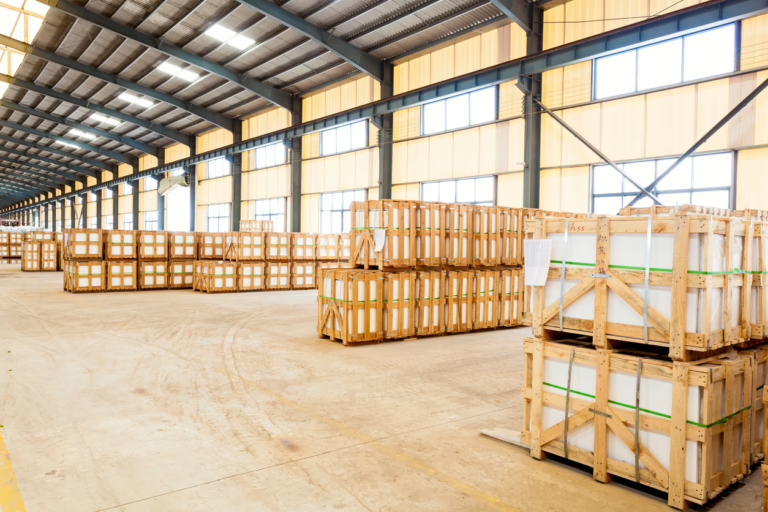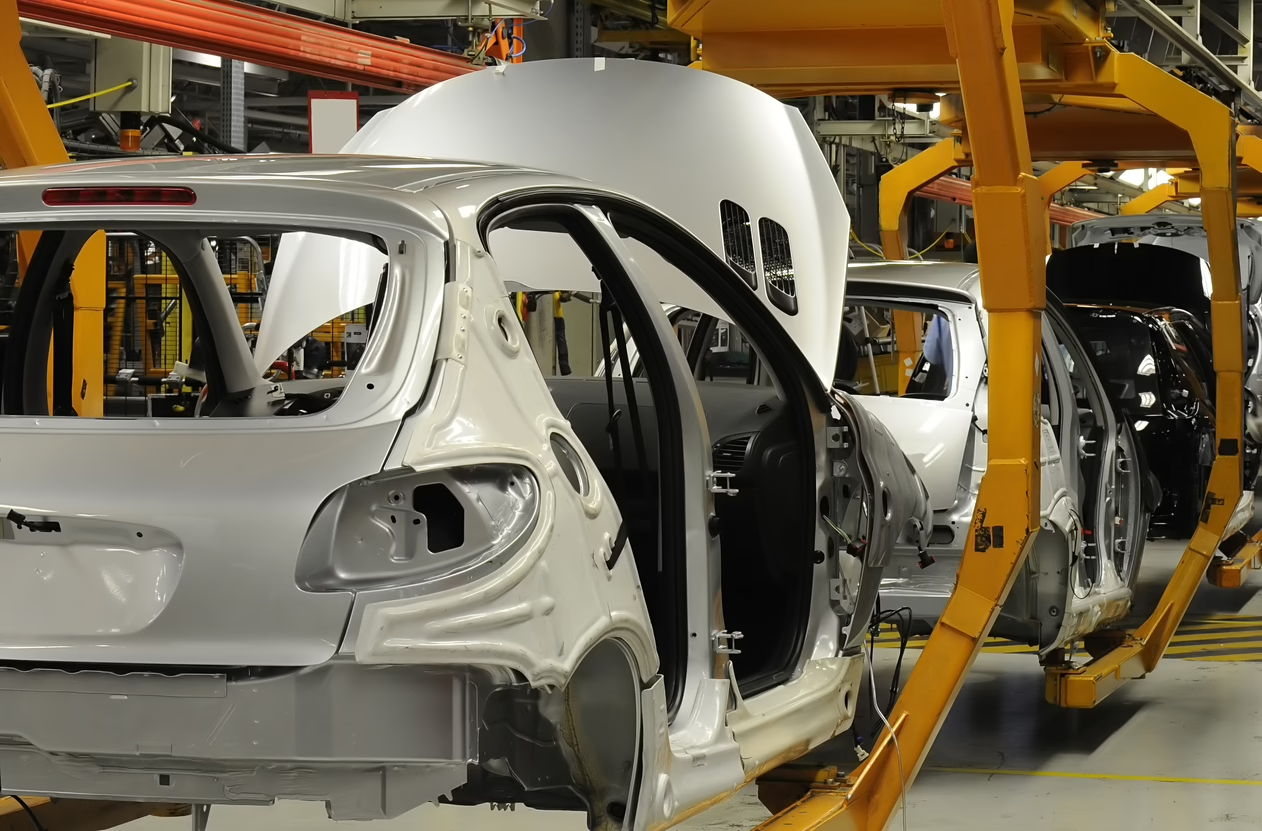
The automotive industry relies on a complex global supply chain. Manufacturers, distributors, repair networks, and aftermarket suppliers regularly move parts between factories, warehouses, assembly plants, and customers across international borders.
These shipments can include everything from small sensors and electronic components to engines, transmissions, tires, body panels, batteries, and production equipment. Because automotive parts vary widely in size, value, and urgency, selecting the right transportation method is essential.
Automotive parts logistics often requires tight coordination, reliable scheduling, accurate documentation, and proper packaging. A delay involving one critical step can interrupt production, create inventory shortages, or leave customers waiting for repairs.
Why Automotive Parts Logistics Requires Careful Planning
Many automotive companies operate with just-in-time inventory systems. Parts arrive close to when they are needed instead of being stored in large quantities.
This can reduce warehousing costs, but it also leaves less room for transportation delays. Missed vessel departures, customs holds, inaccurate documentation, and port congestion can quickly affect manufacturing and distribution schedules.
Automotive companies must consider:
- Cargo size and weight
- Delivery deadlines
- Shipment frequency
- Product value
- Packaging requirements
- Customs regulations
- Dangerous goods restrictions
There is no single shipping method that works for every automotive shipment. The correct solution depends on a number of variables such as cargo, route, budget, and timeline.
Ocean Freight for Automotive Parts
Ocean freight is often the most economical option for large, heavy, or recurring automotive parts shipments.
Companies can choose between Full Container Load and Less than Container Load service.
Full Container Load Shipping
Full Container Load, or FCL shipping, gives the shipper use of an entire ocean container. It is commonly used for:
- Multiple pallets of replacement parts
- Engines and transmissions
- Tires and wheels
- Vehicle body panels
- High-volume supplier orders
- Manufacturing tools and equipment
Common equipment includes 20-foot and 40-foot containers. A 40-foot high-cube container may be useful for lightweight but bulky components.
FCL shipping can reduce handling because the cargo remains inside one container from origin to destination. It also gives the shipper more control over cargo placement and securing.
Less than Container Load Shipping
Less than Container Load, or LCL shipping, allows several shippers to share space inside one container. Each shipper pays for the space their cargo occupies.
LCL shipping may be suitable for:
- Small replenishment orders
- Aftermarket automotive parts
- Individual pallets
- Sample shipments
- Suppliers without enough cargo to fill a container
Because LCL cargo is handled at consolidation and deconsolidation facilities, strong packaging and accurate labeling are especially important.
As shipment volume increases, businesses should compare LCL costs with FCL pricing. At a certain point, using a full container may become more economical.
Air Freight for Urgent Automotive Parts
Air freight is often used when parts are urgently needed to prevent production delays or meet immediate customer demand.
Common examples include:
- Replacement parts for an assembly line
- Electronic control modules
- Sensors
- Prototypes
- Recall-related components
- Emergency maintenance parts
- Testing samples
Air freight is much faster than ocean freight, but it is also more expensive. Charges are generally based on the greater of actual weight or dimensional weight.
A freight forwarder can compare flight schedules, routing options, consolidated air freight, and expedited services to balance speed and cost.
Shipping Oversized Automotive Equipment
Some automotive cargo cannot fit inside a standard shipping container. Large molds, industrial presses, vehicle frames, and assembly-line machinery may require specialized shipping arrangements.
Possible options include:
- Flat rack containers
- Open-top containers
- Breakbulk shipping
- Roll-on Roll-off service
- Heavy-lift handling
- Specialized trucking
Flat rack containers are often used for cargo that exceeds standard container width or height limits. Open-top containers may be suitable when cargo fits within the container’s width but must be loaded from above.
Before requesting a quote for oversized cargo, the shipper should provide:
- Exact dimensions
- Gross weight
- Center of gravity
- Lifting & securing points
- Technical drawings
- Photographs
- Origin and destination
- Cargo-ready date
These details allow the freight forwarder and carrier to determine equipment availability, handling requirements, route restrictions, and securing arrangements.
Packaging Automotive Parts for International Shipping
Proper packaging protects automotive parts from vibration, moisture, impact, and repeated handling.
Heavy parts such as engines, transmissions, and axles may require reinforced crates, skids, or custom steel frames. Smaller parts may be boxed and palletized.
Sensitive electronic components may require:
- Anti-static packaging
- Shock protection
- Moisture barriers
- Temperature controls
Metal parts may also need corrosion protection during ocean transportation. Protective coatings, sealed packaging, desiccants, and moisture-resistant materials can reduce exposure to humidity and salt air.
When wooden pallets, crates, or dunnage are used, they may need to comply with ISPM 15 requirements depending on the country of destination. Noncompliant wood packaging can lead to inspections, treatment, delays, or reexport.
Dangerous Goods in Automotive Shipping
Some automotive components may be regulated as dangerous goods.
Examples include:
- Lithium-ion batteries
- Lead-acid batteries
- Airbags
- Seatbelt pretensioners
- Paints and coatings
- Adhesives
- Pressurized components
- Parts containing fuel or oil
Depending on the cargo, the shipper may need to provide:
- Safety Data Sheets (MSDS)
- Dangerous Goods Declarations
- UN numbers
- Hazard classifications
- Proper shipping names
- Packaging certifications
- Battery test documentation
Lithium batteries require particular attention. Requirements depend on the battery type, condition, watt-hour rating, packaging, and whether the battery is shipped alone or with equipment. Potentially hazardous items should be disclosed before booking so the carrier can confirm acceptance and documentation requirements.
Customs Documentation for Automotive Parts
Accurate documentation is essential for international automotive parts shipping.
Common documents include:
Commercial Invoice
The commercial invoice identifies the buyer, seller, product description, quantity, value, country of origin, and terms of sale.
Descriptions should be specific. “Automotive parts” may be too vague. A better description would be:
New steel brake rotors for passenger motor vehicles
Packing List
The packing list should show:
- Number of cartons, crates, or pallets
- Contents of each package
- Gross and net weight
- Package dimensions
- Marks and numbers
Bill of Lading or Air Waybill
Ocean shipments move under a bill of lading, while air shipments use an air waybill. This document is created and provided by the freight forwarder.
Additional Documents
Depending on the product and destination, customs may request:
- Certificate of origin
- Product specifications
- Manufacturer information
- Material composition
- Safety Data Sheets
- Import licenses
- Compliance certifications
HS Codes and Duty Classification
Automotive parts must be classified under the correct Harmonized System or Harmonized Tariff Schedule code.
Classification can depend on:
- Type of part
- Material composition
- Intended use
- Country of origin
- Whether the item is classified elsewhere in the tariff schedule
Not every automotive component falls under the general category for motor vehicle parts. Tires, batteries, glass, and electrical equipment may have separate classifications.
Incorrect classification can result in delayed clearance, duty underpayments, overpayments, penalties, or customs inquiries. Importers should work with a licensed customs broker to confirm classification and duty rates.
How a Freight Forwarder Supports Automotive Logistics
An experienced international freight forwarder can coordinate:
- Ocean freight
- Air freight
- FCL and LCL shipping
- Supplier consolidation
- Oversized and project cargo
- Inland trucking
- Export documentation
- Customs broker coordination
- Shipment tracking
- Destination delivery
For automotive companies, the value of a freight forwarder goes beyond booking transportation. The forwarder helps select the appropriate shipping method, identify potential risks, coordinate providers, and keep shipments moving according to schedule.
Build a More Reliable Automotive Supply Chain
International automotive parts logistics requires accuracy, speed, and careful coordination. Whether a business is shipping a full container of replacement parts, an urgent air shipment, or oversized piece of equipment, every movement should be planned around the cargo, timeline, route, and regulatory requirements.
By selecting the right transportation method, preparing complete documentation, packaging cargo properly, and working with an experienced international freight forwarder, automotive companies can reduce delays and support a more reliable global supply chain.
Allison Shipping provides international freight forwarding services for automotive parts manufacturers, distributors, suppliers, and other commercial shippers. Our team can coordinate ocean freight, air freight, FCL and LCL shipping, supplier consolidation, and oversized cargo transportation between the United States and destinations worldwide. Contact us today to get a customized quote and optimize your automotive shipping strategy.