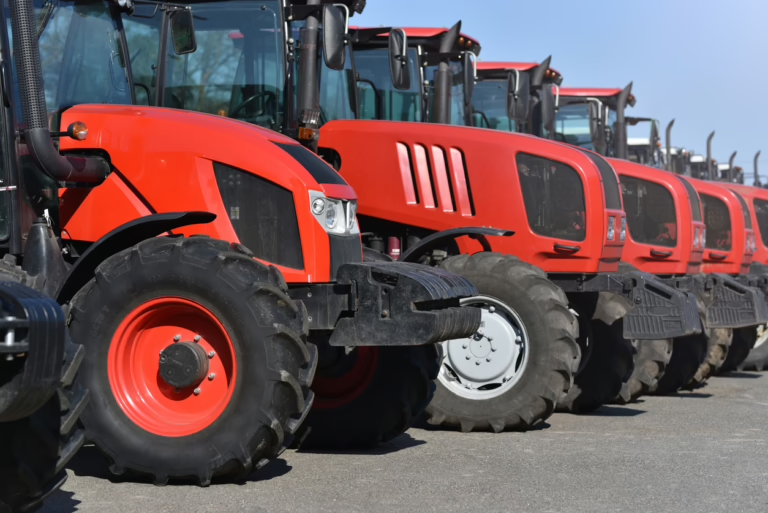
When planning an international shipment, one of the most important decisions you’ll make is how your cargo will be transported. While standard containers have become the backbone of global trade, they aren’t always the right solution. Many businesses ship oversized machinery, industrial equipment, or project cargo that simply cannot fit inside a standard shipping container.
That’s where breakbulk shipping comes into play. Understanding the differences between breakbulk shipping and container shipping can help you choose the most efficient, cost-effective, and reliable transportation method for your cargo. At Allison Shipping, we help companies navigate both options, ensuring every shipment moves safely and efficiently from origin to destination.
What Is Container Shipping?
Container shipping is the most common method of transporting international freight. Cargo is loaded into standardized steel shipping containers, which are then transferred seamlessly between trucks, railroads, and ocean vessels.
The two most common container sizes are:
- 20-foot containers
- 40-foot containers
Specialized containers are also available, including:
- High Cube Containers
- Open Top Containers
- Flat Rack Containers
- Refrigerated (Reefer) Containers
Containerization revolutionized global logistics because it provides:
- Improved cargo security
- Faster loading and unloading
- Lower handling costs
- Reduced risk of cargo damage
- Predictable transit times
Today, the vast majority of international ocean freight moves in containers because they are efficient and economical for general cargo.
What Is Breakbulk Shipping?
Breakbulk shipping refers to cargo that is loaded individually rather than inside a shipping container. Instead of loading freight into a container, each piece is lifted separately using cranes and secured directly onto the vessel.
Typical breakbulk cargo includes:
- Construction equipment
- Mining machinery
- Wind turbine components
- Transformers
- Industrial presses
- Steel beams
- Pipes
- Boats and yachts
- Large generators
- Manufacturing equipment
Breakbulk vessels are specifically designed to handle cargo that is too large, too heavy, or irregularly shaped for conventional containers. For companies involved in infrastructure, energy, manufacturing, mining, and heavy industry, breakbulk shipping is often the only practical solution.
The Biggest Difference
The simplest way to understand the difference is:
Container Shipping
- Cargo fits inside a shipping container.
Breakbulk Shipping
- Cargo is loaded piece by piece because it cannot fit inside a container.
The decision usually comes down to the dimensions and weight of the shipment.
If your cargo exceeds container limitations, breakbulk becomes the preferred option.
When Container Shipping Makes Sense
Container shipping is ideal when your freight:
- Fits within standard container dimensions
- Requires maximum security
- Ships regularly
- Is palletized or boxed
- Benefits from lower transportation costs
Examples include:
- Consumer products
- Electronics
- Furniture
- Retail inventory
- Auto parts
- Foodstuffs
- Packaged industrial products
For these shipments, container freight offers excellent value while minimizing cargo handling throughout the supply chain.
When Breakbulk Shipping Is the Better Choice
Breakbulk shipping becomes necessary when cargo cannot physically fit into a standard container.
Examples include:
- Oversized machinery
- Heavy industrial equipment
- Large tanks
- Factory production lines
- Cranes
- Agricultural equipment
- Power generation equipment
- Marine vessels
Even if special containers like flat racks or open tops are available, some cargo simply exceeds their capacity due to weight, height, width, or length restrictions. In these cases, breakbulk shipping provides the flexibility needed to transport extremely large cargo safely.
Cost Comparison
Many assume breakbulk shipping is always more expensive. While breakbulk shipments often involve additional planning and specialized handling, that’s not always the case.
Container shipping generally offers lower costs because:
- Standardized equipment is widely available.
- Ports are optimized for container operations.
- Loading and unloading are highly automated.
Breakbulk shipping may involve:
- Heavy-lift cranes
- Specialized vessel space
- Engineering studies
- Cargo lashing plans
- Port handling charges
- Route surveys
- Special permits for inland transportation
However, trying to force oversized cargo into multiple containers or modifying equipment to make it fit can sometimes cost more than shipping it as breakbulk. Every shipment should be evaluated individually.
Transit Time Differences
Container shipping usually offers:
- More frequent vessel departures
- Larger carrier networks
- Faster port operations
- More predictable schedules
Breakbulk vessels generally operate on less frequent schedules, especially for niche trade lanes. However, for oversized cargo, breakbulk can actually reduce delays by eliminating the need for extensive cargo disassembly or specialized container arrangements. The best option depends on the specific cargo and destination.
Cargo Safety
Container shipping offers excellent protection because cargo remains sealed inside the container from origin to destination.
Breakbulk cargo receives specialized handling instead.
Every piece is carefully:
- Lifted
- Secured
- Lashed
- Protected from movement during transit
Professional cargo planning is critical. Proper lifting points, weight distribution, and securing methods ensure the cargo arrives safely despite being exposed on deck or in specialized vessel holds.
Working with an experienced international freight forwarder is especially important for breakbulk shipments.
Documentation and Planning
Breakbulk shipments typically require more preparation than containerized cargo.
Depending on the shipment, planning may include:
- Engineering drawings
- Cargo dimensions
- Certified weights
- Lift plans
- Port capability assessments
- Route surveys
- Customs documentation
- Export compliance
- Import permits
Accurate information early in the planning process helps avoid delays, unexpected costs, and operational challenges.
Why Experience Matters
Oversized cargo transportation requires more than simply booking space on a vessel.
An experienced freight forwarder coordinates:
- Ocean carrier selection
- Port handling
- Heavy-haul trucking
- Customs clearance
- Export documentation
- Inland transportation
- Cargo inspections
- Project scheduling
At Allison Shipping, we regularly assist clients shipping oversized freight, project cargo, machinery, industrial equipment, and specialized cargo throughout the world. Our team works closely with carriers, overseas agents, terminals, and transportation providers to develop customized shipping solutions that fit each project’s unique requirements.
Which Shipping Method Is Right for You?
There is no universal answer. If your cargo fits inside a standard container, container shipping is typically the most economical and efficient solution.
If your shipment exceeds container limitations or requires specialized handling, breakbulk shipping offers the flexibility necessary to move large, heavy, or uniquely shaped cargo safely across international borders.
Choosing the correct shipping method from the beginning can save significant time, reduce transportation costs, and minimize logistical challenges throughout the supply chain.
Whether you’re shipping a single pallet, a full container load, or a piece of oversized industrial equipment, partnering with an experienced freight forwarder ensures your cargo moves efficiently from pickup to final delivery.
At Allison Shipping, we provide customized international freight forwarding, breakbulk shipping, container shipping, project cargo logistics, and oversized freight transportation solutions backed by decades of industry experience. If you’re unsure which shipping method best suits your cargo, our team is here to help you evaluate your options and develop the most efficient transportation strategy for your shipment. Contact us today to get a customized quote on your next international shipment.