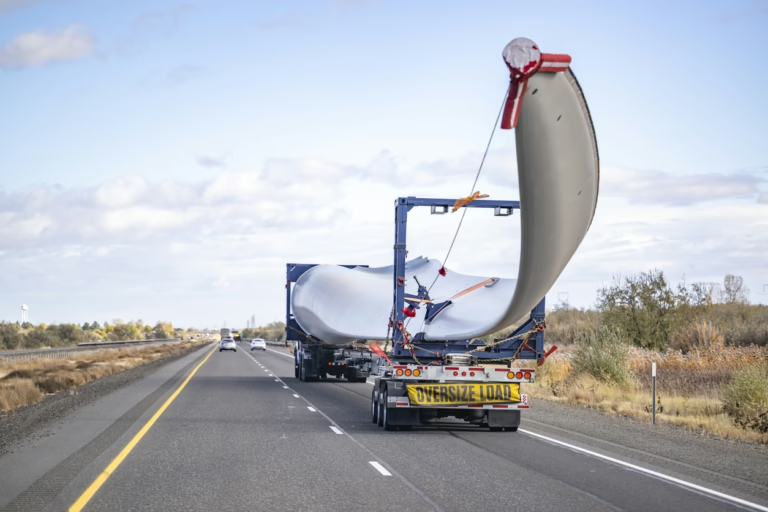
When cargo does not fit inside a standard shipping container, the logistics process becomes more specialized and so does the pricing. Out of gauge (OOG) cargo exceeds a container’s standard length, width, or height.
For many shippers, the first question is simple: Why does OOG shipping cost more? The answer is that oversized cargo requires more than ocean space. It often involves specialized equipment, detailed planning, careful loading, secure lashing, and coordination across trucking companies, terminals, carriers, and ports.
Why OOG Cargo Costs More Than Standard Freight
Standard container shipping is built around uniform equipment and predictable handling. OOG cargo does not always fit that model.
When freight extends beyond the dimensions of a flat rack or requires special lifting and securing, it may occupy more space on the vessel or require unique stowage. Carriers and terminals must account for those operational requirements. As a result, OOG cargo is typically priced differently from standard full container load (FCL) freight.
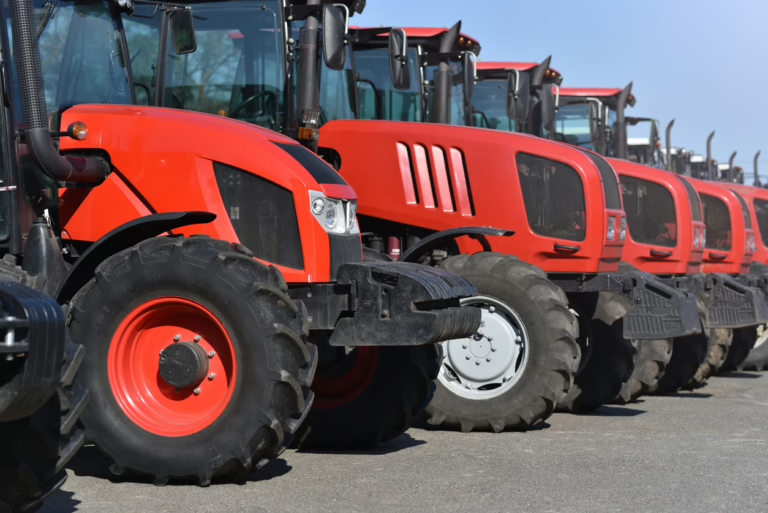
Some cargo may move on a flat rack or open top container, while larger pieces may be better suited for RORO or breakbulk shipping.
- Cargo Dimensions and Overhang
The physical dimensions of your cargo are one of the biggest drivers of OOG shipping costs. Carriers need the total measurements once cargo is loaded, secured, and prepared for transport.
For flat rack containers, cargo may extend beyond the sides, ends, or top of the equipment. This is known as overhang. The more space the cargo occupies, the more difficult it may be to stow safely on the vessel. It can also limit where the cargo can be placed and how other containers can be loaded nearby.
Before requesting a quote, provide exact dimensions and weight, plus photos, drawings, lifting points, and packaging details. Accurate information helps avoid a revised price later.
- Weight and Cargo Characteristics
Weight matters just as much as size. Heavy cargo may require special terminal equipment, crane lifts, or additional coordination. An irregularly shaped item may need a custom cradle, blocking, or extra protection. Weather-sensitive cargo can also require shrink wrapping, tarpaulins, crating, or corrosion protection.
- Flat Rack Equipment Availability
Flat racks are specialized equipment, and availability varies by port, line, season, and trade lane. When equipment is limited, carriers may charge higher rates or offer fewer sailing options. Booking early gives your logistics provider more flexibility.
- Carrier Space and Vessel Stowage
OOG freight may require more than one standard container slot on a vessel, particularly when cargo is over-width or over-height. It may need on-deck stowage, separation from other containers, or a location that allows safe crane access. This restricted space is often reflected in the ocean rate or an OOG surcharge, depending on the cargo footprint, route, carrier, and vessel configuration.
- Lashing, Securing, and Terminal Handling
Oversized cargo must be secured correctly before it moves. Depending on the cargo, this may involve chains, straps, dunnage, blocking, bracing, and a lashing plan. Heavy lifts, special loading procedures, inspections, and additional labor may also be required at the port. A complete quote should identify origin and destination handling costs where possible.
- Inland Transportation, Permits, and Route Planning
The ocean leg is only one piece to the OOG shipping puzzle. Moving oversized cargo to or from the port may require a specialized truck, escort vehicles, route surveys, or permits. The lowest ocean rate does not always produce the lowest total cost; a different port, route, or transport method may reduce inland complexity.
How to Get an Accurate OOG Shipping Quote
The best way to budget for oversized freight is to start early and share complete shipment details. At a minimum, your freight forwarder should receive:
- Exact cargo dimensions and total weight
- Photos, drawings, and lifting-point information
- Origin and destination addresses or ports
- Ready date and delivery deadline
- Packaging requirements and cargo value
- Details about whether the cargo can be dismantled or protected from weather
At Allison Shipping, we help companies evaluate flat rack, open-top, RORO, breakbulk, and other project cargo options based on the shipment’s real requirements.
Plan Ahead for Your Next OOG Shipment
OOG shipping costs reflect the added expertise and coordination required to move cargo safely. The final price depends on dimensions, weight, equipment availability, vessel space, port handling, inland transport, and early planning.
If you are preparing to ship oversized or out of gauge cargo internationally, contact Allison Shipping to discuss your shipment and request pricing tailored to your needs.